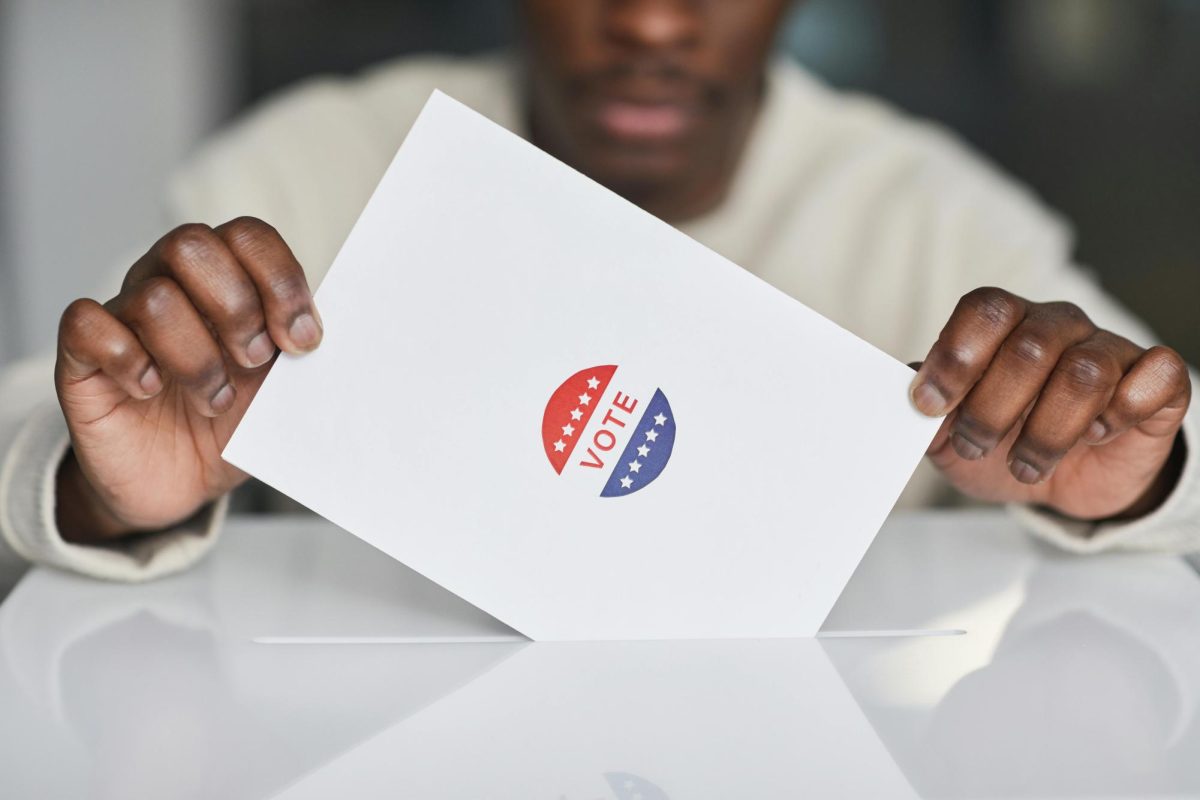




















































During a meeting of county chairmen focused on voter registration, party officials distributed data detailing the number of registered Republicans and Democrats in each county. The meeting was open to the press. The numbers were challenged immediately, as several county chairs said the figures did not match their local records. One chair voiced a particularly stark concern, stating the reported totals appeared to exceed the number of residents in the county, prompting visible frustration among delegates and raising broader questions about how the data was compiled.
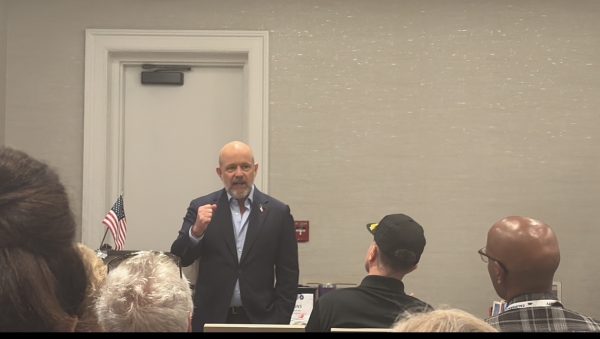
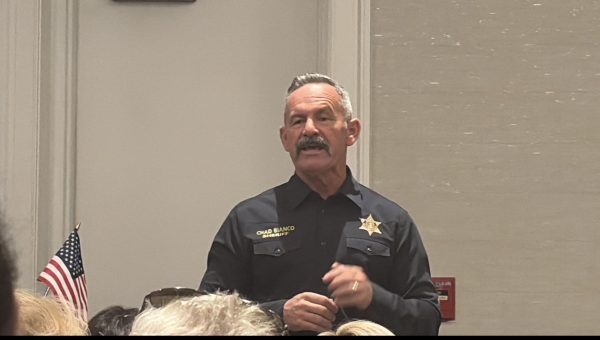
The issue struck at the center of a core Republican priority: voter integrity, a message the party has emphasized consistently since the 2020 election. A separate meeting specifically focused on voter integrity was closed to the press, intensifying concerns about transparency at a moment when accuracy and openness were already being questioned.
That decision prompted questions from student journalist Ryder Bullock, who asked California Republican Party Chairwoman Corrin Rankin to explain the lack of press access. Rankin responded that “not everything is open to the public.” Bullock followed up by asking why a meeting centered on election transparency was not accessible to the press, and what information the party might be withholding.
Shortly after the exchange, Bullock’s press credentials were revoked for breaking CA GOP Code of conduct; it was not specified which part of the code of conduct Bullock broke. Bullock was then escorted out of the venue by Matt Shupe, Communications Director of the California Republican Party and founder of Praetorian Public Relations, a firm focused on political and public affairs. The escort was described by witnesses as calm but immediate.
Following the removal, tensions extended beyond the Sheraton Hotel. Outside the venue, Bullock participated in an interview with Latino Free Minds, after which Eric Stalter described a confrontation where Shupe accused him of misrepresenting events. At least one witness confirmed Bullock was called a liar during the exchange. The interaction drew further attention when Shupe later approached members of the outlet regarding their recording. While no explicit demand was made, one individual described the encounter as feeling “like intimidation.” The video was later taken down.
At the same time, a separate allegation began circulating within the convention regarding Bullock’s conduct. Multiple witnesses, however, stated they did not observe any such incident, and no direct evidence was presented. Bullock denied the allegation.
Hostility continued inside the lobby, when Shawn Steel, longtime Republican figure and husband of newly appointed U.S. Ambassador to South Korea Michelle Steel, and Bullock spoke in the hotel lobby. Stalter says Steel accused Bullock of being “guilty by association of hanging out with Nazis” for interacting with individuals tied to America First views popularized by Nick Fuentes, though Steel clarified that he did not believe Bullock himself was a Nazi or personally held those views.
On Sunday, April 12, during his closing speech at the convention, Steel announced that he removed two Nazis from the convention. Reports indicate that the only people escorted out were Bullock and Delegate Emilio Martinez, with the latter removed following a verbal exchange with CAGOP Delegate and Jewish Community Engagement Chair Elizabeth Barcohana.
An associate delegate who requested anonymity raised additional concerns about both the delay and accuracy of the data provided to party officials. The delegate noted that election data, particularly following a general election, is typically distributed to party leadership within months. In this case, data from the 2024 election cycle was delayed, forcing some candidates and party members to purchase information that is usually provided at no cost. When the data was eventually released, concerns emerged that it may have been outdated or inaccurate.
“It can take time for the Secretary of State to compile, but it should have been available within six months,” the delegate said. “Instead, many Republicans, including candidates, had to pay for it. Then when it was finally released, there were major problems. That raises serious questions about whether campaigns were unintentionally—or intentionally—hindered.”
The incident highlights internal tensions within the party, where election integrity remains a central message, yet concerns over data accuracy, access, and transparency are increasingly being raised by its own members.
The California Republican Party has not publicly responded to questions regarding the disputed voter data, the revocation of press credentials, or the incidents that followed.
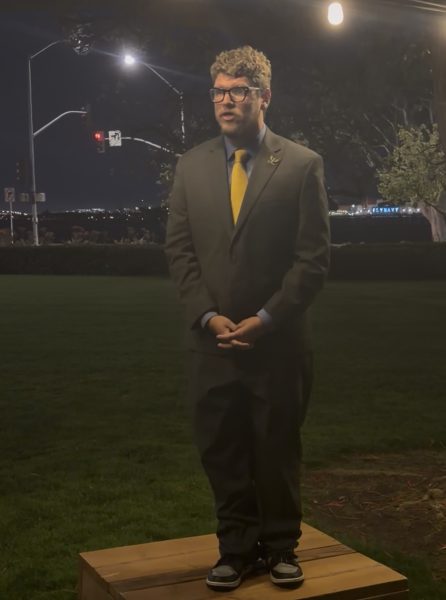
As delegates departed the convention, key questions remained unresolved: Were the voter registration figures accurate? If not, how were they compiled? And why was a meeting on voter integrity closed to the press?
The removal of a credentialed journalist from the event has also raised broader concerns among attendees about the party’s posture toward media access. Several delegates privately questioned whether restricting press access—particularly during discussions centered on voter integrity—undermines the party’s stated commitment to openness and accountability.
For now, scrutiny is coming not from outside critics but increasingly from within the party itself, as questions linger not only about the data, but about who is allowed to examine it.