




















































Back on February 24, 2024, it was big news in Westwood. Deshaun Foster, the former star running back for the UCLA Bruins, who went on to play seven strong seasons in the NFL, was coming home. Chip Kelly was out, and Foster was in. He was hired to bring glory back to the storied program. It didn’t happen.
After going 5-7 in 2024 and an 0-3 start this year, Foster was fired on September 14, 2025, the first NCAA Division 1 coach fired this season. Several others would face the same fate.
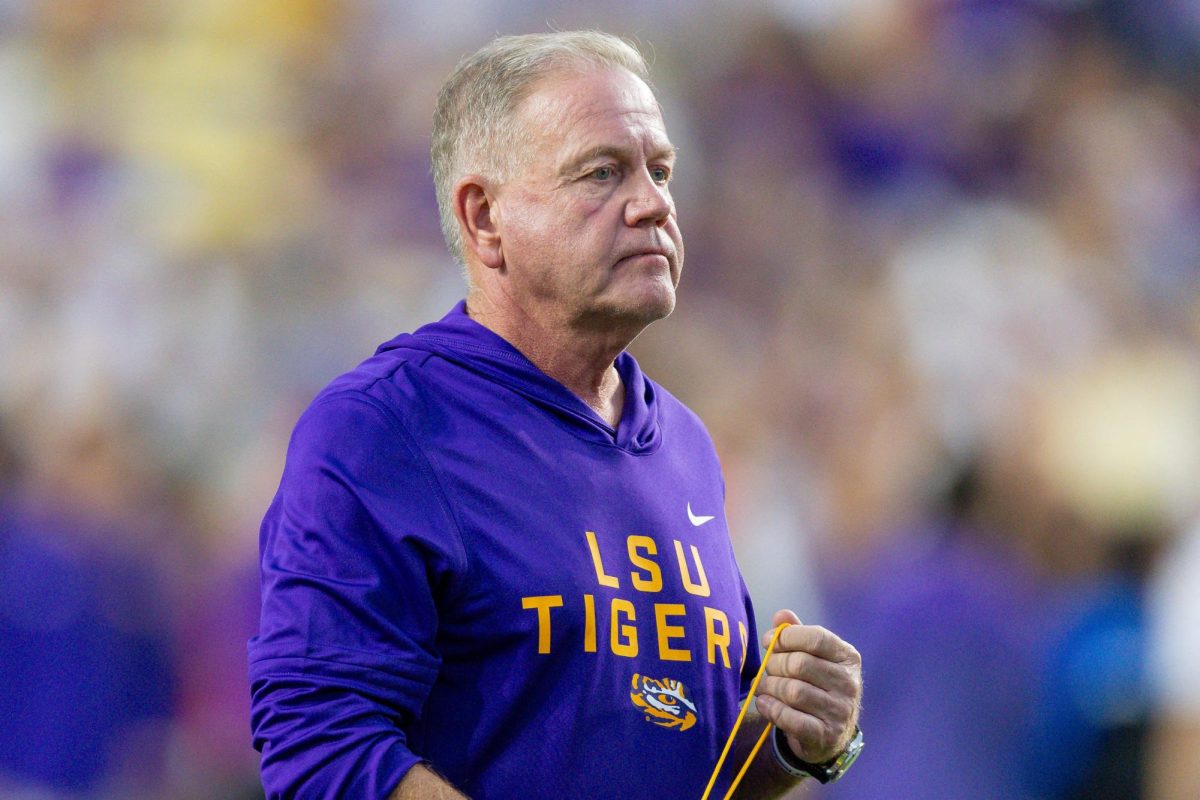
Brian Kelly was fired from Louisiana State on October 26, 2025, after a bad loss to Texas A&M and a 5-3 start.
Justin Wilcox, who compiled a 45-55 record over nine seasons at California, was let go on November 23, 2025.
The list of NCAA football coaches fired this year is long and likely to get longer. Long gone are the days where the likes of Utah’s Kyle Whitingham, Oklahoma State’s Mike Gundy, or Grambling State’s Eddie Robinson coached their programs for 20 years or more.
College football has become big business. Millions are spent, and millions more are made. The pressure on coaches to lead their programs to a championship is enormous. If your team does not win, athletic directors are quick to make a change.
Caught up in the middle of it all, are the student athletes. Rarely do we hear of how such changes affect them.
“If my head coach left or was fired, it would definitely have an impact on me, “says Dylan Riley, the star running back at Boise State, who leads the team with more than 1,000 rushing yards this season. “A coach provides stability, structure, and guidance. Losing that can feel unsettling.”
Riley, who starred at Moreno Valley (CA) Rancho Verde, is in his second year with the Broncos. After rushing for 1,852 yards in his senior season for the Mustangs, his commitment to Boise State was big news in Riverside County. Soon after his signing, in November 2023, the Broncos’ Head Coach Andy Avalos was fired, and replaced by defensive coordinator Spencer Danielson.
“My relationship with my head coach is good. We talk often in his office and around the locker room from time to time,” added Riley, who is back in California preparing for Boise State’s matchup with Washington State on December 13, 2025, in the LA Bowl at SoFi Stadium. “There is usually a level of respect and appreciation on both sides, but at the same time, sports are competitive, so there is always a business side to it. For me, the best relationships are the ones that balance both the personal connection and the professional expectations.”
After 3 seasons and 23 games played at USC, defensive back Ceyair Wright left the Trojans, entering the transfer portal in April 2024.
“When I first arrived at USC, Clay Helton was the head coach and Donte Williams was the defensive back coach. After our second game against Stanford, Coach Helton got fired,” said Wright. “The following season, Lincoln Riley was hired as the head coach. He brought in a bunch of new coaches with him, but luckily, my position coach was retained.”
In most all programs, a head coaching change, usually brings an overhaul to the entire coaching staff. The staff the athletes work with, who were often involved in their recruitment, are replaced. Eager to make the program their own, they bring in their own guys. Doing so does have an impact on the athletes. At the end of Riley’s first season at USC, Defensive backs coach Donte Williams left to take on the same role at the University of Georgia.
“The year that I transferred was after Coach Williams left and went to Georgia,” explained Wright. “It was a small piece of the puzzle, but ultimately the reason I transferred had to do with me and my focus in wanting more for myself.”
College football has always been competitive. The will to win and the prestige of winning a championship are what all programs desire. The path to get there has changed dramatically over the past few decades. Aside from overbearing athletic directors, boosters, national television, and the media critiquing their every move, head coaches still must deal with recruiting. That aspect of their role has changed dramatically with the transfer portal and NIL opportunities for players.
Aaron Bartley, is an emerging two-sport athlete at Blake High School in Silver Spring, MD. The 6’2″sophomore plays defensive end and quarterback for the football team and is a corner infielder and pitcher on the baseball diamond.
“I want to play sports in college,” declares Bartley. “I think the recruiting aspect is interesting and feel players have to do more work and use social media to be seen by coaches. I also think players commit to schools because of coaches and NIL opportunities.”
Bartley spends many hours weekly working on his craft. In today’s youth environment, where coaches urge players to focus on and play one sport, he is an outlier. His weekly schedule goes from the gridiron one day to the batting cages and the pitching mound on the next one.
The annual run of firings in college football is not lost on high school players. Recruiting is as competitive as ever, and the nation’s teenage athletes do take notice, as it influences their decisions too. They see the headlines, and often have to make difficult decisions if a coach who recruited them is fired.
“I think players commit to schools mainly because of the relationship they build with coaches. I would probably decommit and consider other offers because personally,” says Bartley. “To get to the next level, I would choose a school for my education, the coaching, and then look at the NIL opportunities. But if it was my only offer and the coach got fired, I would probably stay.”
NCAA football is bigger than ever. The game is still basically the same, but the road taken to bring it to the fans who love it has changed considerably in today’s age. There is a lot more activity taking place behind the scenes, playing significant roles in what ultimately goes out on the field. At the forefront are the head coaches who have to navigate it all.
“If I had to give advice to a young player considering a school that has a coaching situation that is in limbo, I would tell them that you shouldn’t go to a place because of the Coach,” added Wright, whose Nebraska Huskies are preparing for their New Year’s Eve matchup against Utah in the Las Vegas Bowl, at Allegiant Stadium.
“If you do go there and the coach leaves, recognize that the person who brought you in is now gone. Ultimately, coaches come and go so it is important to choose a school in which you can thrive at, regardless of who the coach is,” suggests Wright.

Joe Childs • Dec 17, 2025 at 3:37 pm
I agree with the players. The coach that recruited him has a special bond from recruiting to playing.