



































































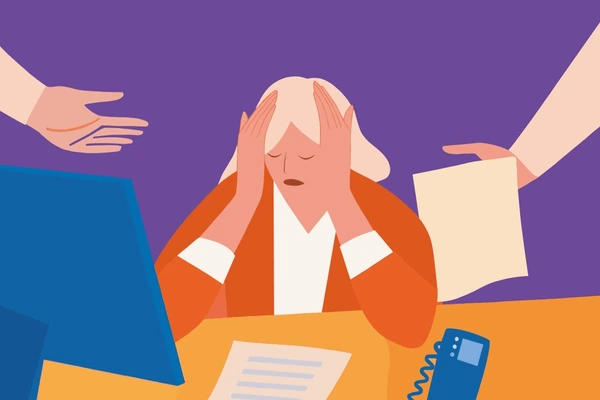
Anxiety, depression, and stress are driving burnout and mental health struggles among college students. These mental health challenges have brought students isolation and stress. In response, colleges have invested in mental health resources to help students manage the pressure and challenges they go through.
Mental health refers to a person’s emotional, psychological, and social well-being, all of which influence how people think, feel, and behave. In turn, this affects how they manage stress, build relationships, and make decisions in everyday life. The most common mental health conditions are anxiety disorders, depression, bipolar disorder, post-traumatic stress disorder (PTSD), and eating disorders. Many have been challenged by their mental health; it’s been reported by the American College Health Association that young adults have the highest rates of mental health struggles, such as college students.
According to Evelyn Rodriguez, a college student, “I feel college students are just learning how to manage everything on their own and can get lost with themselves.” She expresses her own mental health challenges she faced during her first year of college. “I had started to not show up for classes, and as a result, I fell behind. This eventually led me to having to repeat classes.” She explained “Over time, reaching out for help became a struggle, causing me to perform badly.” She stresses that college is a huge change for students and that not reaching out for help can cause them to not perform at their best and lead them to fall behind. Evelyn’s struggles display the experiences of many students who are learning to navigate independence and academic pressure.
Myeshia Bobo, the Interim Director of Mental Health Service at Mt. San Jacinto College, says these types of challenges are why services exist, to ensure students don’t have to go through them alone. “We see mental health as just as important as physical health because it’s hard for students to focus on school when they’re not at their best” said Bobo. “Our goal is to make students have everything they need to be successful, both inside and outside the classroom.”
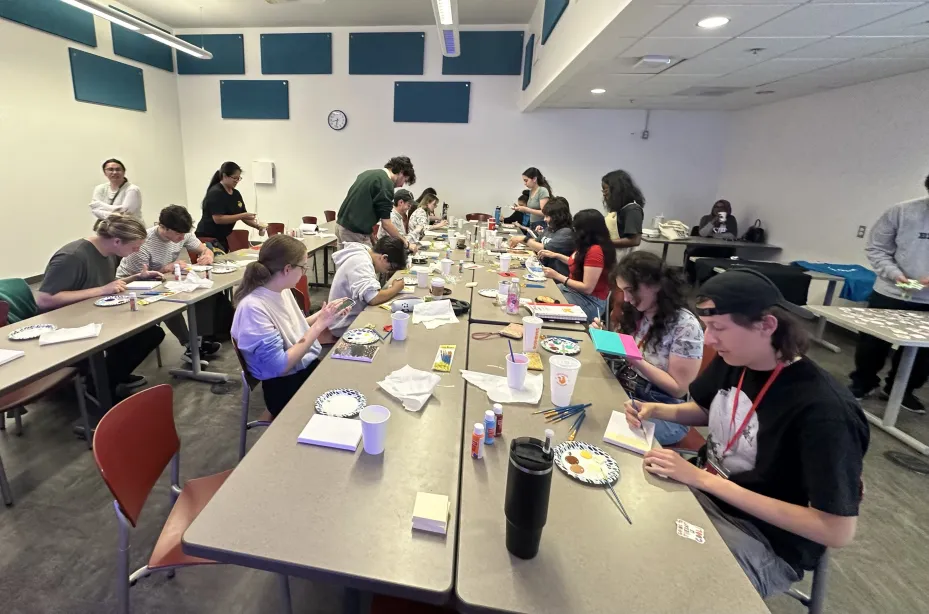
At the MSJC student health center, students can access up to eight free counseling sessions each semester, and they are offered in person or virtually, where they can talk through issues ranging from academic stress to family challenges or trauma. These counseling sessions are fifty minutes long and are available Monday through Thursday from 9:00 a.m. to 5:00 p.m. The health center also hosts monthly one to two-hour virtual workshops on topics like burnout, anxiety, and many more, along with campus events such as yoga sessions and art workshops to promote awareness and coping strategies. Not only does the health center have mental health services, but it also has medical services, and by housing both medical and mental health services in one place, staff say they can treat “the whole student,” making it easier for students to get care without the barriers of navigating multiple offices.
In addition to formal counseling, Bobo encourages students to build small, but meaningful, habits that support mental well-being, such as rest, connections, and healthy routines. “Sometimes it’s as simple as finding one supportive friend, taking a break, or doing something comforting” Bobo explained. “We want students to know their struggles are valid and that help is here when they need it.”
As awareness of student mental health grows, colleges like Mt. San Jacinto are working to ensure that students have the support they need to succeed both academically and personally. By treating mental health with the same importance as physical health, the health center faculty at MSJC hopes to prevent students from falling behind and to equip them with the tools to thrive. Services such as free counseling sessions, workshops on stress and anxiety, and wellness events like yoga and art activities provide students with multiple ways to support their mental well-being. With medical and counseling services located in one center, MSJC health center staff emphasize a “whole student” approach, making it easier for students to access the help they need.
For those ready to reach out, appointments can be scheduled in several ways, such as visiting the health center’s front desk, calling or emailing the office at [email protected], or using the online student patient portal (https://msjc.edu/healthcenter/patient-portal.html). Staff say these options are designed to remove barriers and encourage students to take that first step towards getting the support they need.

